
AI-generated images imagining global landmarks as Chinese-style scenic attractions have gone viral, leaving people laughing — and then reflecting on why they find them familiar.
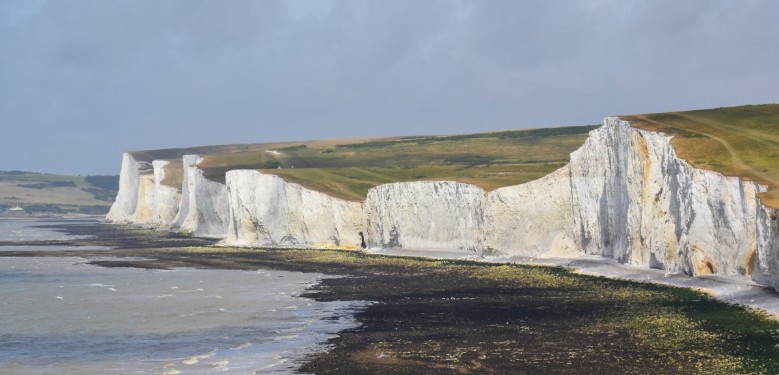
A viral AI experiment recently transformed Britain’s Seven Sisters cliffs into a fictional Chinese tourist attraction.
The original dirt paths along the cliffs would be paved into concrete walkways, with photo frames installed every 200 meters. Visitors could also enjoy an immersive light show projected onto the thousand-year-old cliffs at night. Before leaving, they would have to walk through an 800-meter commercial street.
The concept quickly went viral online.
Emma, a British resident living near Eastbourne, found the idea amusing but said she would find it difficult to accept if the cliffs were ever developed that way, as many local residents would likely be deeply upset.
Emma explained that the Seven Sisters cliffs are managed by the South Downs National Park, which takes a deliberately restrained approach and tries to keep commercial facilities away from the core landscape. This is broadly consistent with how most scenic areas in Europe, the US, Australia and Japan are managed.
China’s scenic attractions have taken a different path, and the issue cannot simply be attributed to aesthetics.
Behind the growing number of artificial facilities that have drawn widespread criticism online is a more fundamental issue: Chinese scenic attractions are often expected to contribute to local economic growth, sometimes taking on responsibilities far beyond tourism itself.
After all, it is difficult to create new revenue streams from natural scenery alone. But once elevators, cable cars and shuttle buses are introduced, they can extend the visitor journey and create additional revenue streams through separately ticketed services.
Safety concerns are another factor. Scenic-area managers may continue adding infrastructure because they face pressure to avoid being held responsible after accidents.
Even when regulations do not require every cliff edge to have a guardrail, accidents often trigger public pressure over visitor safety, pushing scenic areas to add more infrastructure.
The problem is not safety measures themselves, but the tendency to turn every management challenge into a construction project.
These additions, whether for revenue generation or risk control, can gradually erode the character of natural landscapes and make once-distinct destinations look increasingly similar.
Many overseas attractions face the same challenge, but often choose risk management over large-scale transformation. Norway’s Pulpit Rock, Ireland’s Cliffs of Moher and Yosemite’s Half Dome all use approaches such as warnings, access controls or visitor limits rather than reshaping the landscape.
For Chinese scenic areas, the challenge ahead is to redraw the boundary between infrastructure and nature. Facilities should serve visitors without becoming the main feature of the landscape, allowing the scenery itself to remain the lasting memory.