“Flying to Shanghai after work on Friday” has become a new weekend ritual among young South Koreans.
Lee Jae-myung gave a nod to this trend at the recent China–South Korea Business Forum. On social media, the craze has turned everyday scenes in Shanghai into viral content: Korean-language labels now appear across store shelves, and in some shops, staff have even started speaking Korean with customers.
Airlines have taken notice. With Shanghai Pudong at its core, capacity on China–South Korea routes is rising rapidly—so much so that Shanghai’s airports are increasingly being “surrounded” by South Korean carriers.
According to data from Flight Master, over the past week (December 30 to January 6), the Shanghai Pudong–Incheon route operated 126 flights, served by seven airlines. Capacity deployed by foreign carriers has already surpassed that of Chinese airlines.
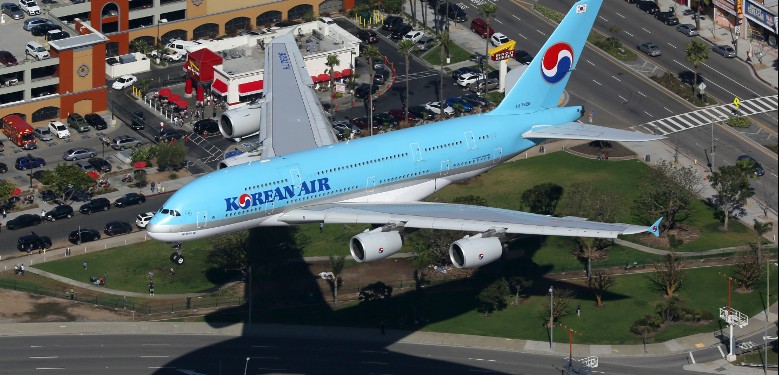
Korean Air’s 2025 annual report shows that Shanghai has become the most closely watched Chinese destination among South Korean travelers. Passenger numbers on routes to Shanghai increased by 128,000 year on year, compared with 71,000 to Beijing and 63,000 to Qingdao.
While Shanghai has emerged as the go-to destination for South Korean youths’ “inbound weekends,” many Chinese young travelers’ “outbound weekends” to South Korea now depart from Chongqing.
From added frequencies to fully booked red-eye flights, these routes have become must-haves for K-pop fans and flash-trip travelers alike.
Starting January 24, Air China will increase the Chongqing–Seoul route to one daily flight. From March 30, Asiana Airlines will resume the same route, also with one daily flight. This will bring the total frequency on the route to 14 flights per week.
Beyond Korean Air, Jeju Air has added multiple new China routes, including Busan–Shanghai, Incheon–Guilin, Jeju–Xi’an, and Incheon–Weihai/Yanji, underscoring airlines’ rapid response to growing demand for cross-border weekend travel.
Flight Master data show that routes from mainland China to South Korea have posted four consecutive weeks of growth. In the first week of 2026, weekly flight volumes exceeded 1,000 flights, recovering to 97.2% of 2019 levels and ranking first among all international routes.
As of December 2025, China and South Korea were connected by 64 air routes. Domestic airlines accounted for 61.57% of total flights, while international carriers made up the remaining 38.43%.