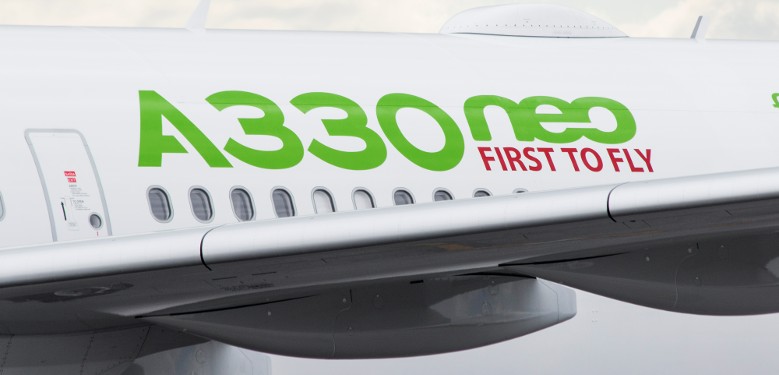
On November 16, Hainan Airlines’ newly introduced Airbus A330neo wide-body aircraft operated its inaugural commercial flight as HU7382 (Beijing–Haikou), taking off smoothly from Beijing Capital International Airport.
This marks the first time a Chinese airline has introduced the A330neo wide-body aircraft and put it into regular service.
As the newest member of Hainan Airlines’ fleet, the A330-900 features a two-class cabin layout with 301 seats — 24 in Business Class and 277 in Economy Class — with cabin details designed to closely match the travel habits of Chinese passengers.
On October 29, Hainan Airlines officially took delivery of the A330neo in Toulouse, France, and quickly scheduled a nationwide showcase tour from November 11 to 15, with the aircraft appearing at five major hub airports: Shanghai Hongqiao, Guangzhou Baiyun, Shenzhen Bao’an, Chengdu Shuangliu, and Beijing Capital.
Such an intensive display reflects both the fierce competition in China’s wide-body aircraft market and the strategic calculations behind fleet planning.
Across the Chinese market, as of the end of September 2025, airlines operated 197 Airbus A330-series aircraft, accounting for 42% of all wide-body aircraft, making it the most widely used wide-body type in the country.
This trend signals a rational shift in Chinese airlines’ fleet choices:
In the past, some carriers pursued large, long-range wide-body jets, only to find in actual operations that overreliance on such aircraft often led to excess capacity.
By contrast, the A330neo’s positioning — medium to long range with moderate capacity — aligns far better with the post-pandemic pattern of more frequent flights with smaller passenger loads on each departure on international routes.