
AI is changing how travel products are discovered, evaluated and booked. But in the view of Felix Shpilman, CEO of Emerging Travel Group (ETG), this does not mean the intermediary layer in travel distribution will disappear. On the contrary, when consumers, businesses, travel agencies, hotels and distributors all have their own AI agents, an aggregation layer connecting these agents will remain indispensable.
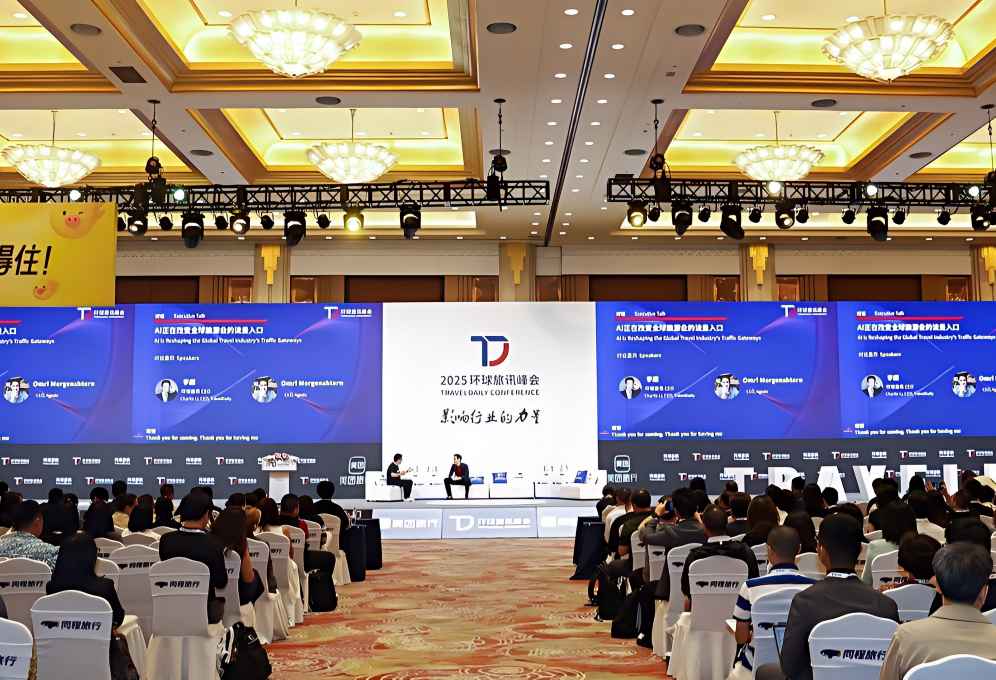
On September 22, at the 2026 TravelDaily Conference, Felix Shpilman joined Joseph Xia, Managing Director of VariFlight Global, for a discussion on how AI is reshaping travel distribution efficiency and the industry landscape.
Founded in 2010, ETG is a global travel technology group headquartered in the UAE. Its three main brands are RateHawk, ZenHotels and Roundtrip. The company operates in more than 220 source markets worldwide and has over 3,900 employees.
As ETG’s CEO, Shpilman has witnessed the company’s evolution from a B2C hotel booking business into a B2B travel distribution platform. Today, RateHawk is a key part of its B2B business.
If AI agents can eventually handle transactions on behalf of consumers, businesses, travel agencies and even hotels, a fundamental question arises:
If agents can communicate directly with one another, will travel distributors be cut out altogether?
Shpilman’s answer was unequivocal: “Absolutely not.”
He believes that almost every participant in the travel distribution chain will eventually have its own agent.
Consumers will have personal AI agents. Businesses will deploy enterprise-level agents to help employees book business trips. Travel agencies will use agents to improve efficiency, while distributors will have their own agents and MCPs. Hotels, too, may develop their own agents.
These agents will work together, but that does not mean the intermediary layer will disappear.
In Shpilman’s view, the aggregation layer connecting these agents may become even more important.
The reason is straightforward: without an aggregation layer, a consumer’s personal AI agent would need to connect individually with a vast number of hotel-level agents.
ETG’s system alone covers more than two million hotels.
“The last thing a human wants is for their personal AI agent to communicate directly with hotel-level agents,” Shpilman said.
As the number of agents grows, the complexity of connecting them may actually increase.
From this perspective, AI is not simply bypassing intermediaries. Instead, it may redefine the role of the intermediary layer in travel distribution.