
China’s hotel market is facing a pronounced imbalance between supply and demand, while growing uncertainty over investment returns is making the era of rapid, extensive expansion a thing of the past. Domestic hotel groups are accelerating their push into more niche market segments.
For international brands, the ability to better understand local consumer demand—particularly the evolving preferences of Gen Z and the growing appetite for cultural and travel experiences—will be critical to determining their position in the next stage of market development.
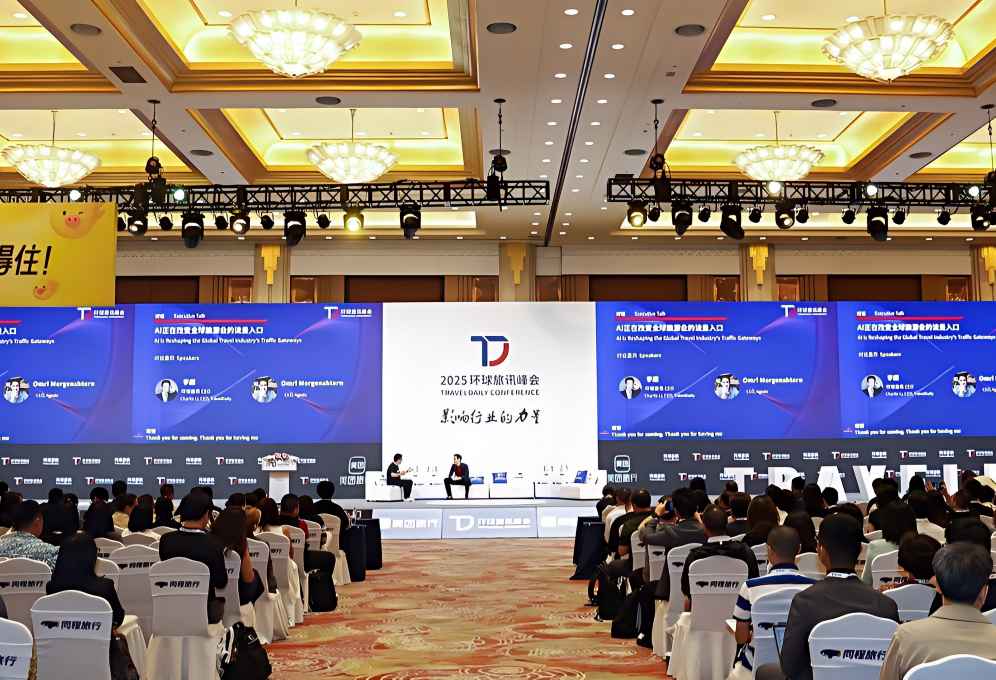
At TravelDaily’s Hotel Marketing Conference, VariFlight Global Managing Director Joseph Xia moderated a panel discussion titled “How Global Hotel Brands Localize Their Products for Gen Z and the New Cultural-Tourism Consumer.” The discussion brought together Nong Xia, Hilton President of Development for Greater China & Mongolia; Kent Sun, IHG Hotels & Resorts Chief Development Officer, Greater China; and Haochun Xu, Shangri-la Group Chief Officer, New Development (China), to explore how international hotel brands can adapt their products to the Chinese market.
Nong Xia: “We should not simply frame this as a choice between international and local brands. The real question localization needs to answer is: what should change, and what must never change?”
Localization is about how a brand expresses itself in a particular market. Elements such as spatial design, F&B offerings and service delivery can all be adapted, but brand promises, safety and hygiene standards, and the consistency of the core guest experience cannot be compromised.
“Localization is a solution; I don’t see it as a brand promise in itself. We can change the way a brand is expressed, but we cannot lower our aesthetic standards or compromise on consistent delivery.”
The market is full of products marketed under the banner of “Chinese culture.” Some demonstrate genuinely sophisticated aesthetics, while others amount to little more than “ugly fake antiques.” Ultimately, localization is simply a way for a brand to express itself in a particular market. It does not mean turning the entire brand into a local one.
“We also would not create a separate brand exclusively for a particular country or culture. Likewise, we don’t believe that creating a brand specifically for a particular age group is the right choice today.”
Haochun Xu: “To be frank, international brands can easily overestimate their bargaining power and the value of their loyalty programs in their investment models, while underestimating operating and system costs in the Chinese market.”
International brands generally have more expensive systems, he said. Yet they still retain advantages in China because they tend to place greater emphasis on protecting their reputation and are far more likely than domestic brands to reject owners who fail to meet compliance requirements.
Kent Sun: IHG Hotels & Resorts has a long history in China, dating back 51 years to its entry into Hong Kong, with mainland operations beginning in 1984. The group has opened more than 100 new hotels in Greater China so far this year, bringing its regional portfolio to another major milestone.
“We have always followed the principle of ‘In China, for China,’ and have remained closely attuned to the local market. That is also the feedback we consistently hear from our hotel owners.”