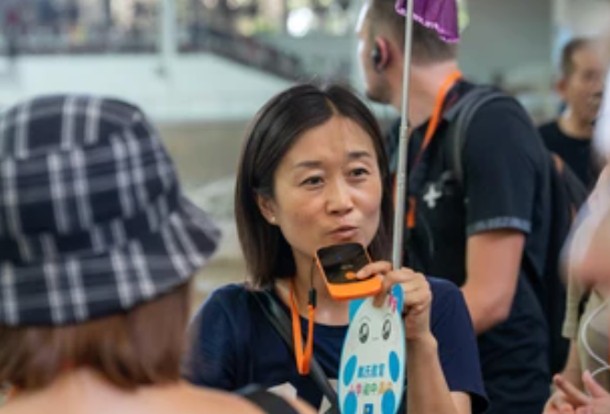
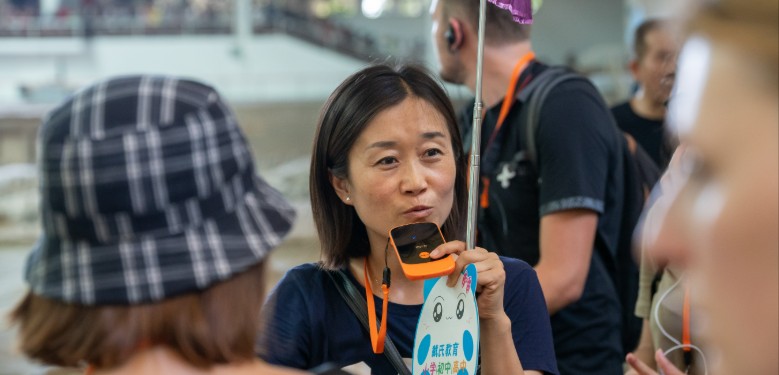
Recently, an English-speaking tour guide in the Yangtze River Delta received a job offer with an unexpected price tag: just RMB 500 (about USD 70) for eight hours.
She was furious and took the issue to social media, calling on fellow guides to reject what she described as a race to the bottom driven by unsustainably low prices.
The post quickly drew support from English-speaking tour guides across China. Many took to the comments section to express their frustration over declining rates and the growing pressure to compete for work at lower prices.
Over the past two years, as competition in China’s tourism industry has intensified, rates for English-speaking guides have gradually fallen. But until now, they had at least managed to hold the line at around RMB 600 (about USD 89) for eight hours.
As the guide explained, eight hours is merely the “normal working time” visible to tourists. Outside those hours, an English-speaking guide typically spends another two to three hours preparing tour materials, plus another one to two hours traveling to and from the meeting point.
There is more. Compared with Chinese-speaking guides, English-speaking guides also take on the additional responsibility of providing language support throughout the tour. From delivering professional commentary to accompanying guests to a restroom or convenience store, they need to stay alert whenever guests speak, ready to interpret immediately.
Even after a tour ends, English-speaking guides are often expected to provide translation assistance online whenever guests need it.
By that calculation, an English-speaking guide can easily expend twice the physical and mental energy of a Chinese-speaking guide. Their actual working day can stretch to 12 hours, while 14- to 16-hour days are far from unusual.
If the job were simply a little harder, more tiring and less profitable, perhaps that would be understandable. After all, that reflects the reality of today’s tourism market.
But what really pushed these English-speaking guides over the edge was this:
Behind the ultra-low rate of RMB 500 (about USD 70) for eight hours was a deeper sense of frustration — that their profession was being deliberately undervalued, and that the people doing the work were not being respected.
Being an English-speaking tour guide may not be considered an exceptionally high-barrier profession. But for a licensed guide to truly master English, especially the ability to deliver professional and engaging commentary in English, requires significant time and effort.
Many entered the profession believing that this specialized skill could provide them with a stable career and a decent income, allowing them to live with dignity and confidence.
Few expected that English-speaking tour guides would one day be viewed as “cheap labor”—their services casually discounted, with workers are forced to compete and scramble simply for the chance to secure a job.
Such a loss of professional recognition can be difficult for anyone in the industry to accept.
So perhaps what these English-speaking guides are resisting is not simply an ultra-low rate of RMB 500 (about USD 70) for eight hours.
They are fighting to preserve the dignity of their profession.