
ChinaTravelNews, Ritesh Gupta – Tongcheng Travel targeted core OTA revenue expansion via a balanced combination of domestic baseline stabilisation and high-velocity international scaling in the second quarter (Q2) this year.
The company’s total revenue rose by 6.8% year-to-year to RMB 4.98 billion. Core OTA revenue went up by 8.4% year-on-year to RMB 4.34 billion. Tourism revenue stood at RMB 643 million.
One of the highlights of the quarter was how Tongcheng navigated domestic headwinds by leaning into high-frequency platform engagement and shifting its domestic mix toward higher-value hotel stays.
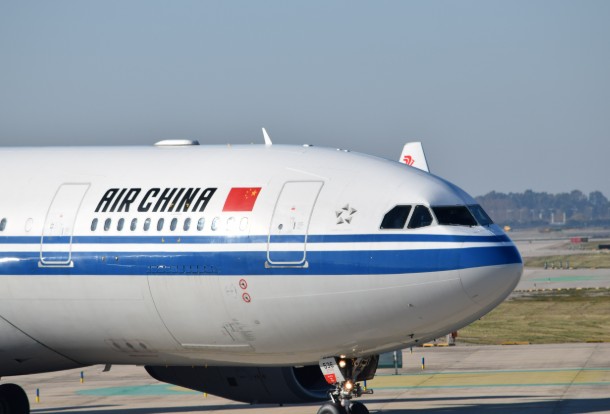
Ma Heping, Chief Executive Officer of Tongcheng Travel, mentioned the OTA overcame a challenging situation during the quarter. China’s domestic aviation sector experienced upward adjustments in jet fuel surcharges and baseline airfares, which directly dampened consumer appetite, particularly through May and June. This was compounded by regional extreme weather disruptions across parts of the country that impacted flight schedules and seasonal travel patterns. Reflecting on how the company absorbed these shocks, Heping said, “Facing short-term headwinds arising from higher fuel surcharges, we proactively adjusted operating strategies, implemented targeted cost management initiatives, and continuously enhanced operational efficiency.”
Monetisation efficiency
Tongcheng’s user metrics presented an interesting divergence in Q2. While broad monthly active user metrics faced compression due to macro headwinds, monetisation efficiency per user improved significantly. Average monthly paying users (MPUs) stood at 43.7 million, representing a 5.8% year-over-year decrease.
Despite this compression in user volume metrics, revenue contribution per active user increased markedly. Core OTA revenue grew by 8.4%, supported by an increasing annual revenue per user (ARPU), which reached RMB 80 (a 10% year-over-year increase). Also, as shared by the management, higher transaction values were driven by a shift toward higher-star hotels and cross-selling in international segments.
Joyce Li, Tongcheng’s Chief Capital Officer, pointed out that a key focus was to drive repeat transactions and loyalty among “high-value members.”
Several marketing and distribution initiatives were worked out, according to Li. For instance, for Tongcheng’s international accommodation business, the team strengthened its global hotel supply, particularly by deepening partnerships with local suppliers in Southeast Asia and South Korea to secure more high-quality hotel supplies, said Li. “At the same time, we stepped up cross-selling with our international air ticketing business by executing more precise marketing campaigns aimed at outbound travellers. In addition, we refined our international hotel products and services to better address users’ travel needs and pain points. As a result, our international room nights sold delivered exceptional growth of more than 50% in the second quarter.”
Li shared that the marketing team sought to boost traveller confidence. “On the marketing front, we continued to innovate. In response to the fuel surcharge burden, we launched the Fuel Free Wednesdays campaign. For first-time international travellers, we introduced a regret-free card that addressed users’ concerns over cancellation fees, substantially lifting conversion rates.”
Marketing efficiency was also reflected in strong app engagement, with daily active users (DAUs) exceeding five million. Customer acquisition costs remained under control as Tongcheng managed to hold its sales and marketing expense ratio flat-to-down at 32.6%. Plus, high-frequency users executed higher-value transactions (such as multi-service cross-selling between transport and hotels).
Revenue Mix
The upward movement of core OTA revenue was driven by a dual-engine mix of domestic baseline stabilisation and high-velocity international expansion.
Domestically, while long-haul travel faced friction from high airfares and fuel surcharges, Tongcheng offset volume dips by upgrading its product mix. The proportion of upscale hotel room nights (three-star and above) grew by roughly three percentage points, supporting average daily rates (ADR) and stabilising core domestic accommodation revenue (which grew 8% to RMB 1.48 billion).
Simultaneously, international segments provided a strong growth engine. International hotel room nights surged by over 50% year-over-year, lifting international accommodation’s share of total accommodation revenue from 2.8% to 4.0%. On the transport side, international air tickets expanded to account for 8.6% of total ticketing revenue.
Therefore, the 8.4% growth in core OTA revenue was not a result of a single market; it was anchored by a resilient domestic baseline that protected cash flows, layered with a rapidly scaling international outbound mix that injected high-margin incremental growth.