The 2025 global airport passenger rankings have been released.
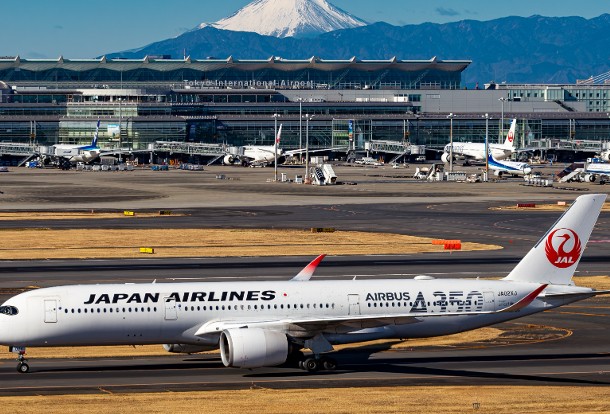
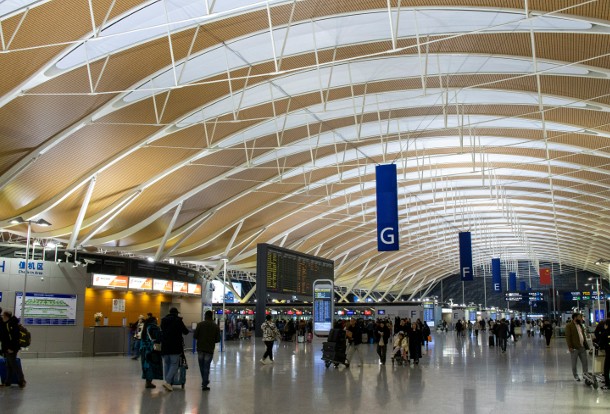
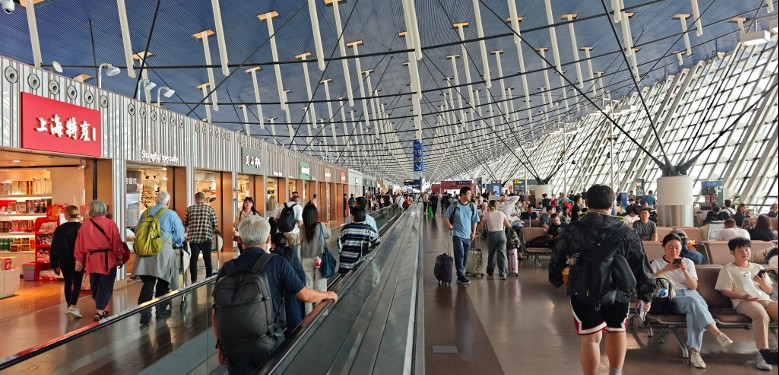
Shanghai handled 135 million passengers, entering the global top three for the first time and overtaking Tokyo to become Asia’s busiest airport city.
However, globally, leading cities still maintain a clear edge. London retained the No. 1 position with 179 million passengers, up 0.9% year-on-year, with Heathrow Airport accounting for about 47% of total traffic.
New York’s three major airports handled a combined 142 million passengers, ranking second, though down 2.3% year-on-year.
Overall, global airport traffic remains concentrated in a small number of core cities. In 2025, 11 cities surpassed the 100-million-passenger mark, indicating a largely stable top-tier structure.
Within this landscape, Chinese cities continued to perform steadily. In addition to Shanghai, Beijing ranked sixth, and Chengdu 15th. Cities ranked 11th to 16th include Los Angeles, Seoul, Dubai, Bangkok, and Miami.
In terms of growth momentum, some major hubs are accelerating their recovery. Istanbul led the top 10 with a 9.3% growth rate, followed by Shanghai at 8.3%, making it one of the most dynamic core markets globally.
Shanghai’s rise to third place in 2025 reflects not only its role in serving the Yangtze River Delta, but also its strengthening position as a national gateway and international hub.
More importantly, this growth is not driven by a short-term surge at a single airport, but by the coordinated development of its dual-airport system—Pudong and Hongqiao. One anchors international and long-haul traffic, while the other supports high-density domestic and business travel. This division of roles enhances Shanghai’s resilience in both recovery and structural optimization.
To some extent, Shanghai’s overtaking of Tokyo also signals a broader shift in Asia’s aviation landscape, with passenger flows increasingly concentrating in cities that recover faster, have stronger hinterlands, and offer more comprehensive connectivity.