
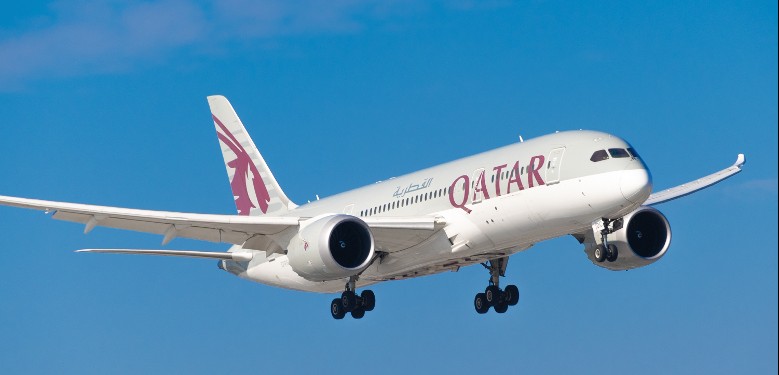
As the United States and Israel launched a joint military strike on Iran on February 28, codenamed “Operation Epic Fury,” followed by Iran’s retaliatory missile and drone attacks across the Middle East, geopolitical tensions in the region swiftly escalated into a global aviation crisis.
According to aviation analytics firm Cirium, more than 710 flights in the Middle East were canceled on March 1 alone. Over the weekend, between 1,800 and 3,400 flights were affected worldwide, with more than 19,000 experiencing significant delays.
As cancellations mounted, large numbers of travelers who had already checked out of their hotels were stranded en route, triggering ripple effects across the globe. From Sydney and Bali to Dhaka and major European hubs, hundreds of thousands of transfer passengers were left waiting anxiously in airports. The disruption highlighted the irreplaceable role of Middle Eastern hubs as the “heart” of the global aviation connectivity, particularly for traffic between Europe and Asia and Oceania.
There are generally three main corridors connecting Europe and East Asia (China, Japan, and South Korea).
The first is the northern corridor, commonly known as the Siberian route. As the highest-latitude path and the shortest great-circle distance, it was the most fuel- and time-efficient option in peacetime. Before the pandemic, airlines such as Aeroflot and Finnair frequently offered competitively priced services between Europe and Asia via this corridor.
However, since the outbreak of the Russia–Ukraine conflict in 2022, Russia has closed its Siberian airspace to airlines from Europe, North America, Japan, and South Korea in retaliation for Western sanctions and airspace restrictions.
The second is the central corridor, which departs from Bulgaria, crossing the Black Sea, Georgia, and Azerbaijan, then enters Kazakhstan before continuing to China. This is the shortest Europe-China route that avoids Russian airspace. As a result, European carriers such as Air France–KLM, Lufthansa, British Airways, SAS, and Finnair have widely adopted this path for East Asian services.
The third is the southern corridor, passing through the Gulf states — the route most severely disrupted in the current conflict. Although longer, it overlaps with routes from Europe to Southeast Asia and Oceania, concentrating transfer traffic in major hubs such as Dubai, Doha, and Abu Dhabi. Even many Europe-Singapore direct flights traverse this region.
This crisis has led to a sharp contraction in capacity between Europe and East Asia and Southeast Asia, reshaping the competitive landscape. Overall, the shift appears to favor Chinese airlines.
Middle Eastern carriers are rebooking affected passengers onto Chinese airlines such as Air China, China Eastern, China Southern, and Cathay Pacific. As a result, fares on Europe–China routes operated by these carriers — particularly Cathay Pacific, known for its agile pricing response — have risen markedly. In some cases, premium cabins such as business class have been sold at full fare for consecutive days.
To some extent, this episode is testing Chinese airlines’ transfer coordination capabilities and operational resilience. With the Lunar New Year travel peak winding down — typically the off-season for international routes — the current geopolitical disruption could instead serve as an unexpected stage for Chinese carriers to demonstrate their strength to international travelers.
