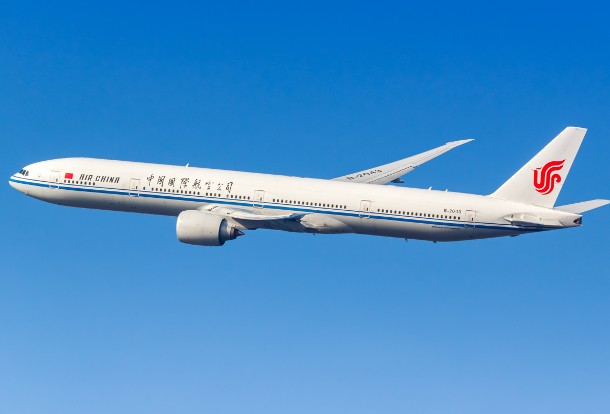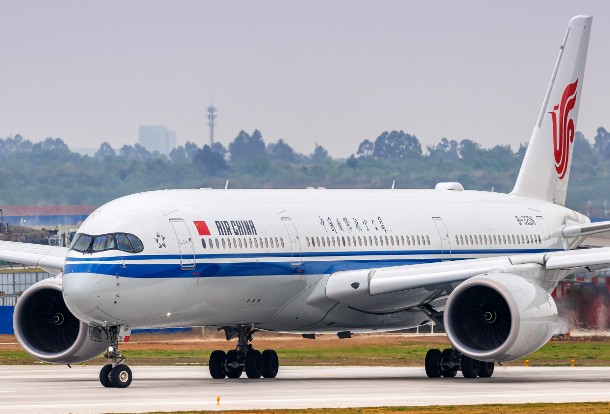
Starting next month, Air China will launch two new routes:
* Beginning March 24, a daily nonstop service between Beijing Capital and Brussels;
* Beginning March 26, a three-times-weekly service between Chengdu Tianfu and Brussels.
In July 2006, Hainan Airlines launched the Shanghai–Beijing–Brussels route, the first direct service between mainland China and Brussels, and at the time the only nonstop air link between China and Belgium.
Targeting the Southwest China market, Hainan Airlines opened the Chongqing–Brussels route on November 22, 2025. This marked another Belgium–China service following its existing Brussels routes to Beijing, Shenzhen, and Shanghai.
With four routes spanning North China, East China, South China, and Southwest China—the country’s four major economic regions—Hainan Airlines has, after two decades of sustained expansion, established itself as the long-standing dominant carrier on the Brussels route.
Other competitors soon followed. In addition to Air China and Hainan Airlines, Juneyao Air also launched its Shanghai–Brussels service in 2024.
Why has Brussels become such a strategic battleground for airlines?
As the headquarters of both the European Union and NATO, Brussels is widely regarded as the “capital of Europe” and serves as a central node for political, economic, and cultural exchanges between China and Europe.
Brussels Airport is also one of Star Alliance’s key secondary hubs in Europe. On one side, it offers dense, high-frequency connections to major cities across the European continent.
On the other, it serves as a “golden gateway” to Africa, with frequent services to West African cities such as Dakar and Abidjan, as well as strong onward connectivity to major North American destinations including New York and Chicago—making it an efficient transfer hub linking Europe, Africa, and North America.
According to Aviation Flow data, the load factor on the Shanghai–Brussels route reached nearly 90% on return flights in July 2025.